Autonomy without accountability is just a ticking clock. If our systems are going to let machines move value, we need to know who answers when things shift.
The internet is quietly flooding with autonomous scripts, trading loops, and utility-seeking bots that can execute code, move value, and interact with contracts in milliseconds.
We built them to operate without us, yet we still judge them as if they exist in a vacuum.
Right now, an autonomous agent can drain a liquidity pool, trigger a cross-chain trade, or spin up a smart contract deployment in seconds. But when a counterparty asks who is actually standing behind those automated decisions, the network goes blank. We have optimized for pure autonomy while completely ignoring the fundamental question of accountability.
This friction is where the agentic narrative shifts.
An autonomous loop without a verifiable origin isn't freedom; it's an unmitigated liability. True adoption of autonomous systems cannot scale on anonymous wallet addresses alone. When protocols and enterprise infrastructure begin interacting with machine-driven logic, they need a cryptographic guarantee that a real, accountable entity authorizes the actions taking place.
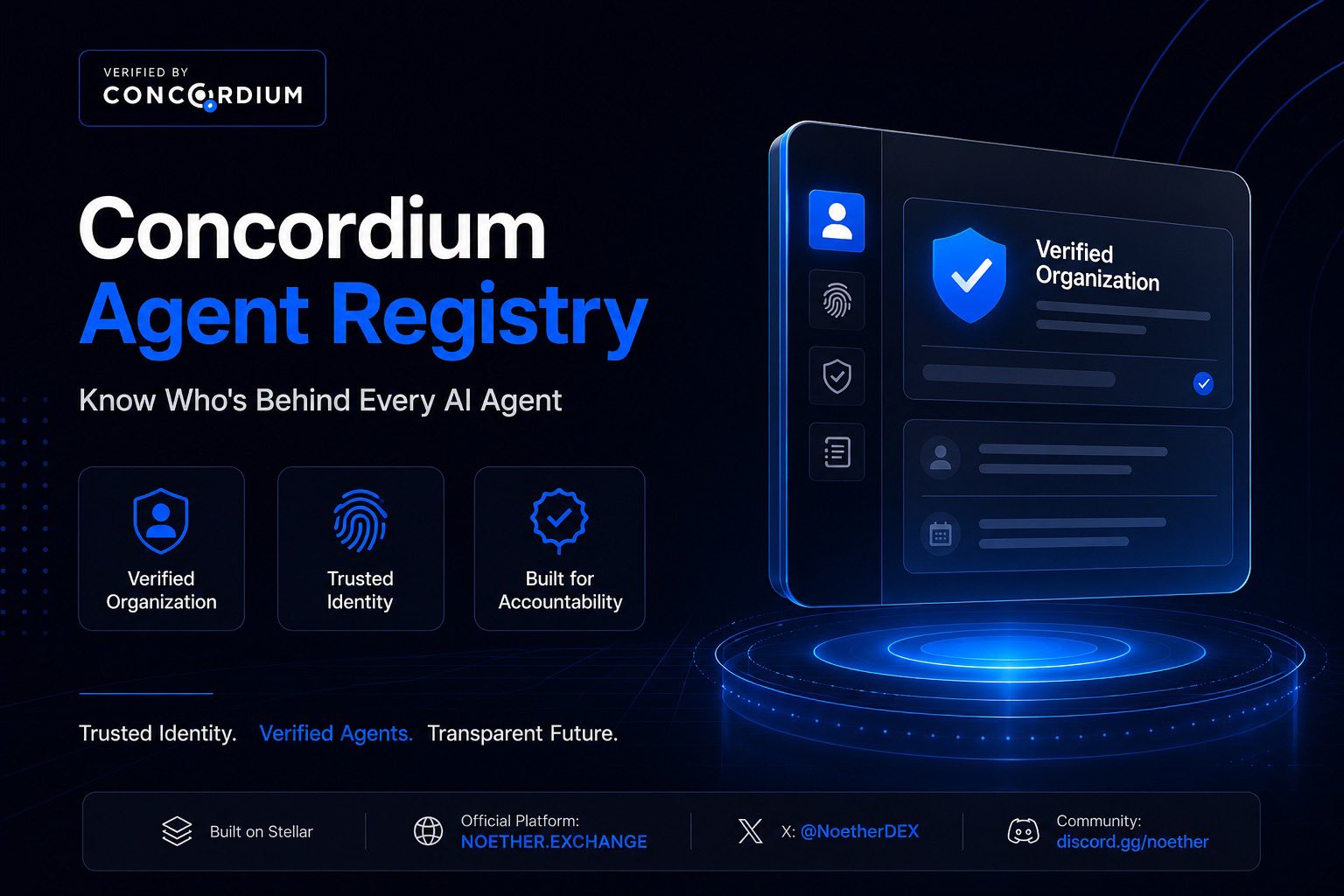
This is why anchoring agent identities directly at the protocol layer matters. By connecting an autonomous agent’s keys to a verified, privacy-preserving identity framework using zero-knowledge proofs, networks like @Concordium solve the missing half of the equation. The agent retains its speed and autonomy, but every transaction carries a verifiable link to a real human or business without exposing sensitive personal data.
If the agentic economy is going to move beyond experimental sandboxes into real financial settlement, autonomy must finally meet accountability.
Exploring how protocol-level identity changes the rules for the agentic economy over at https://t.co/LwltUiPBeB.
#ConcordiumAmbassador